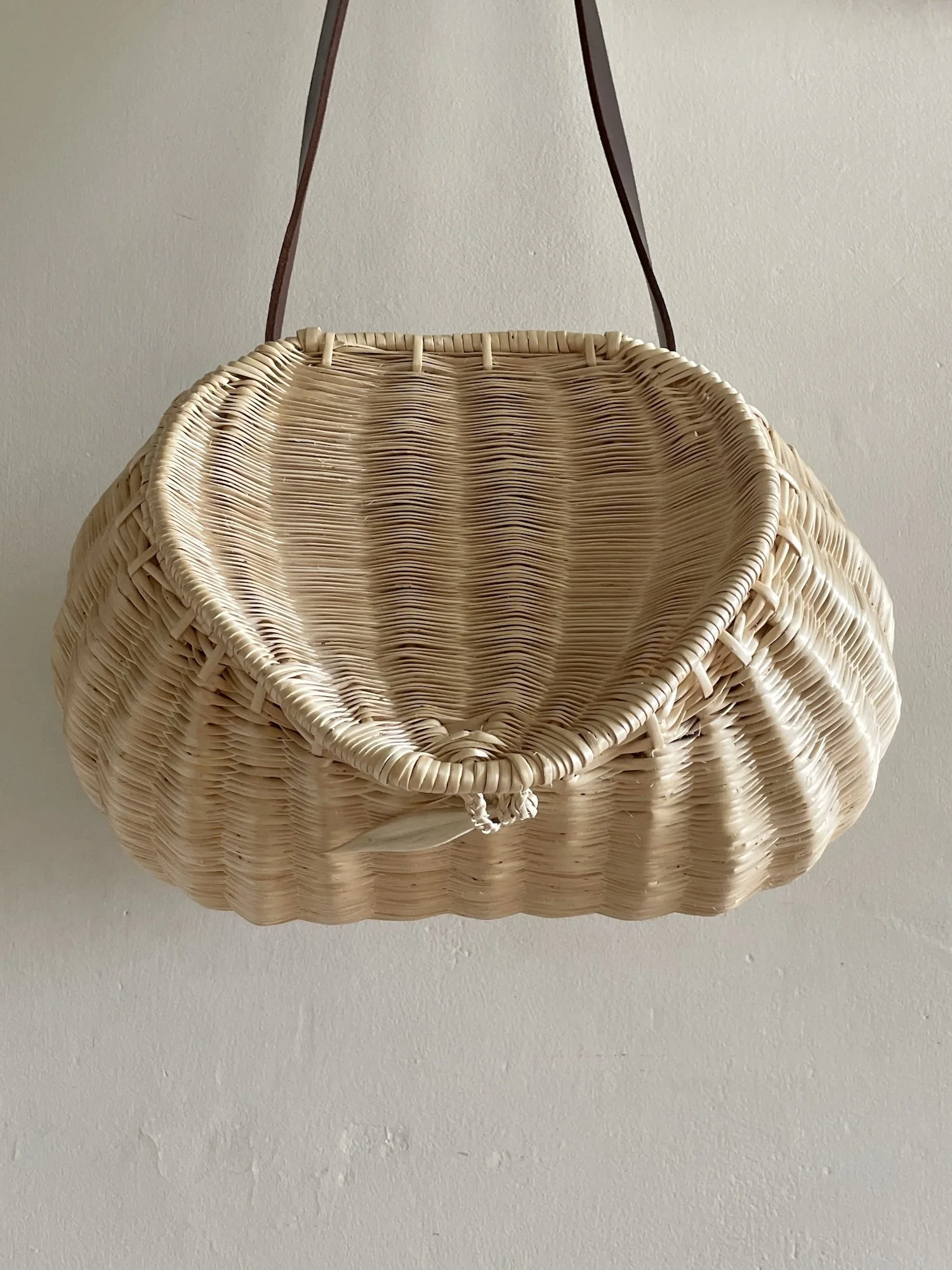
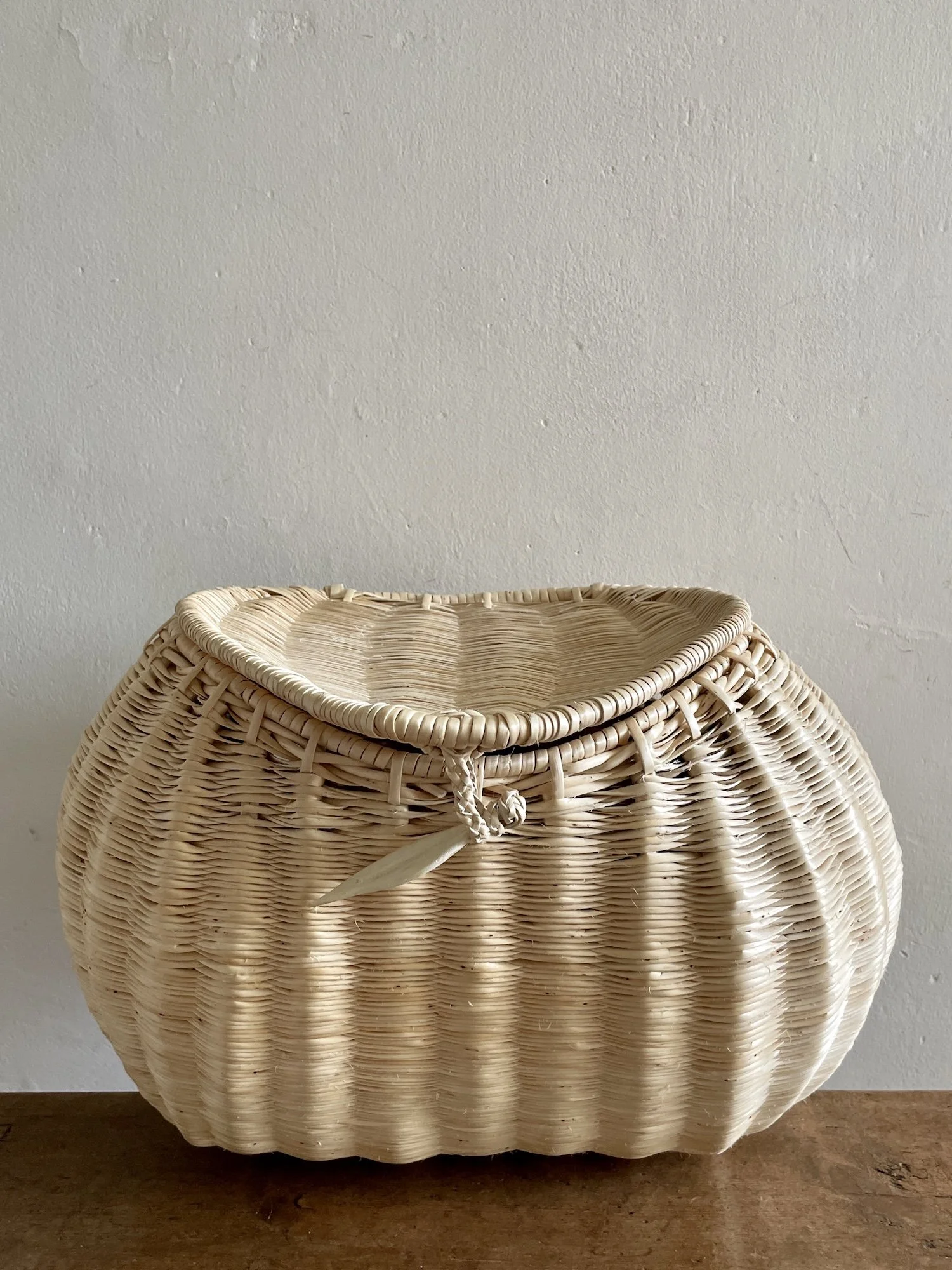
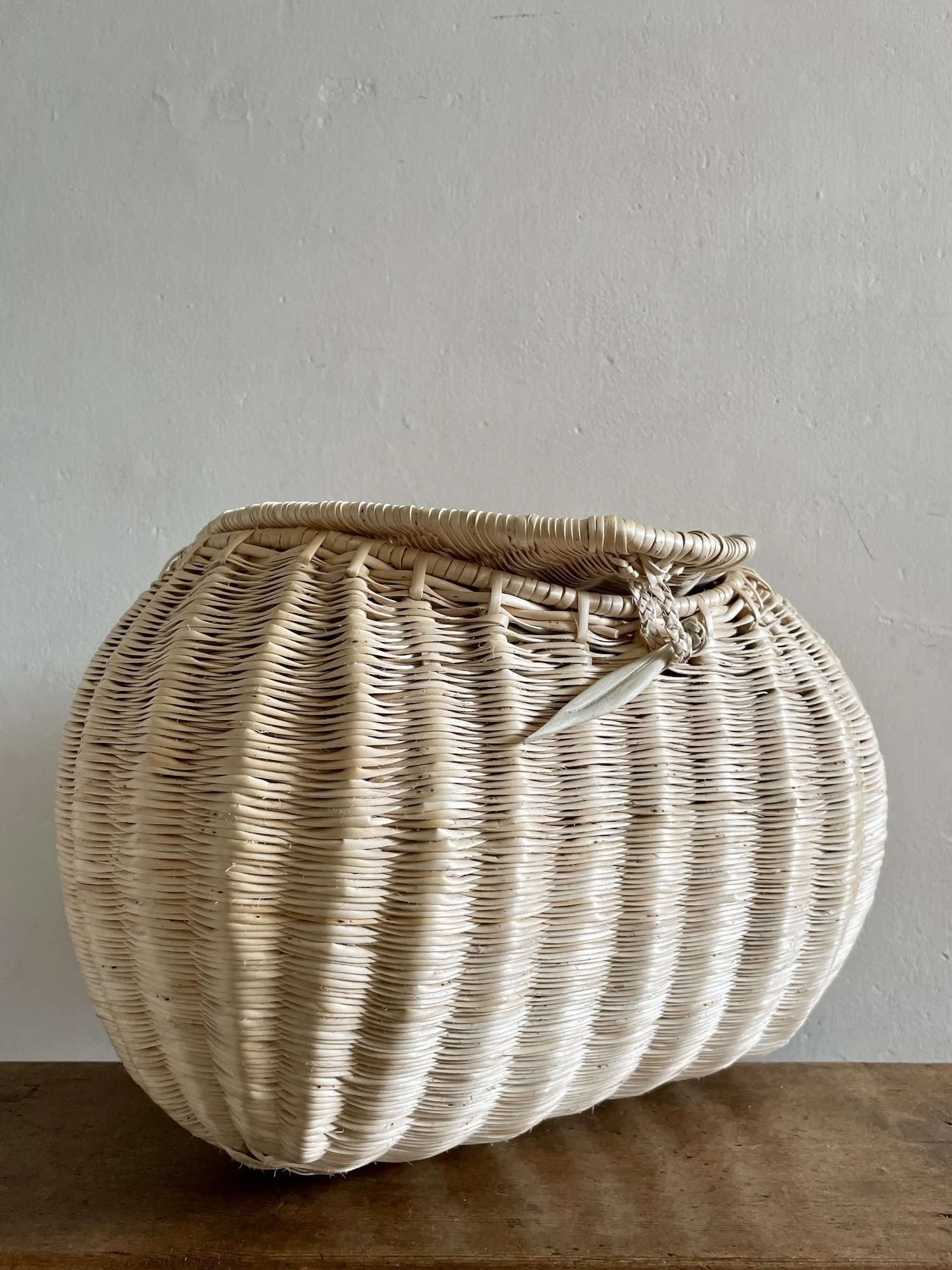
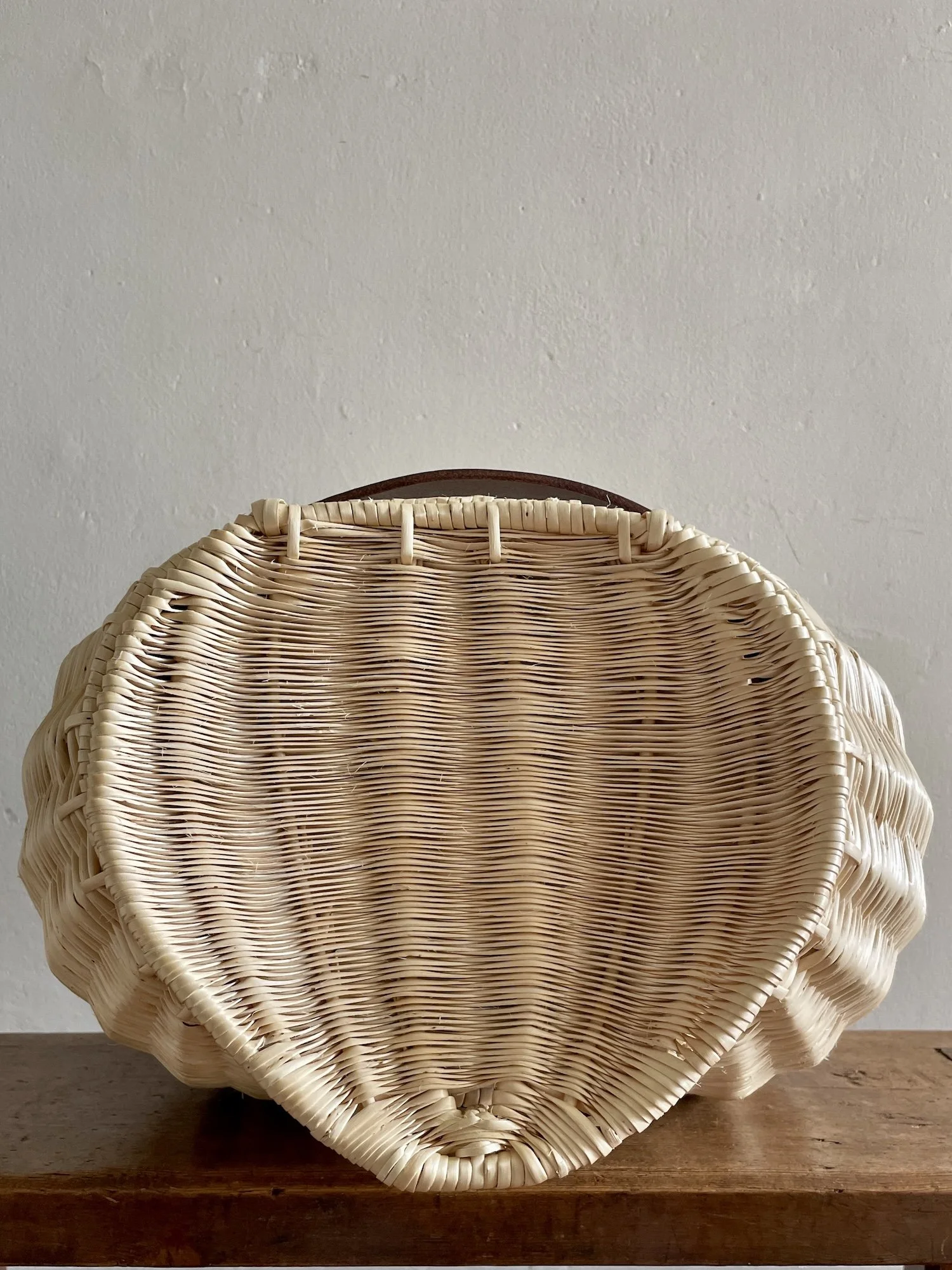
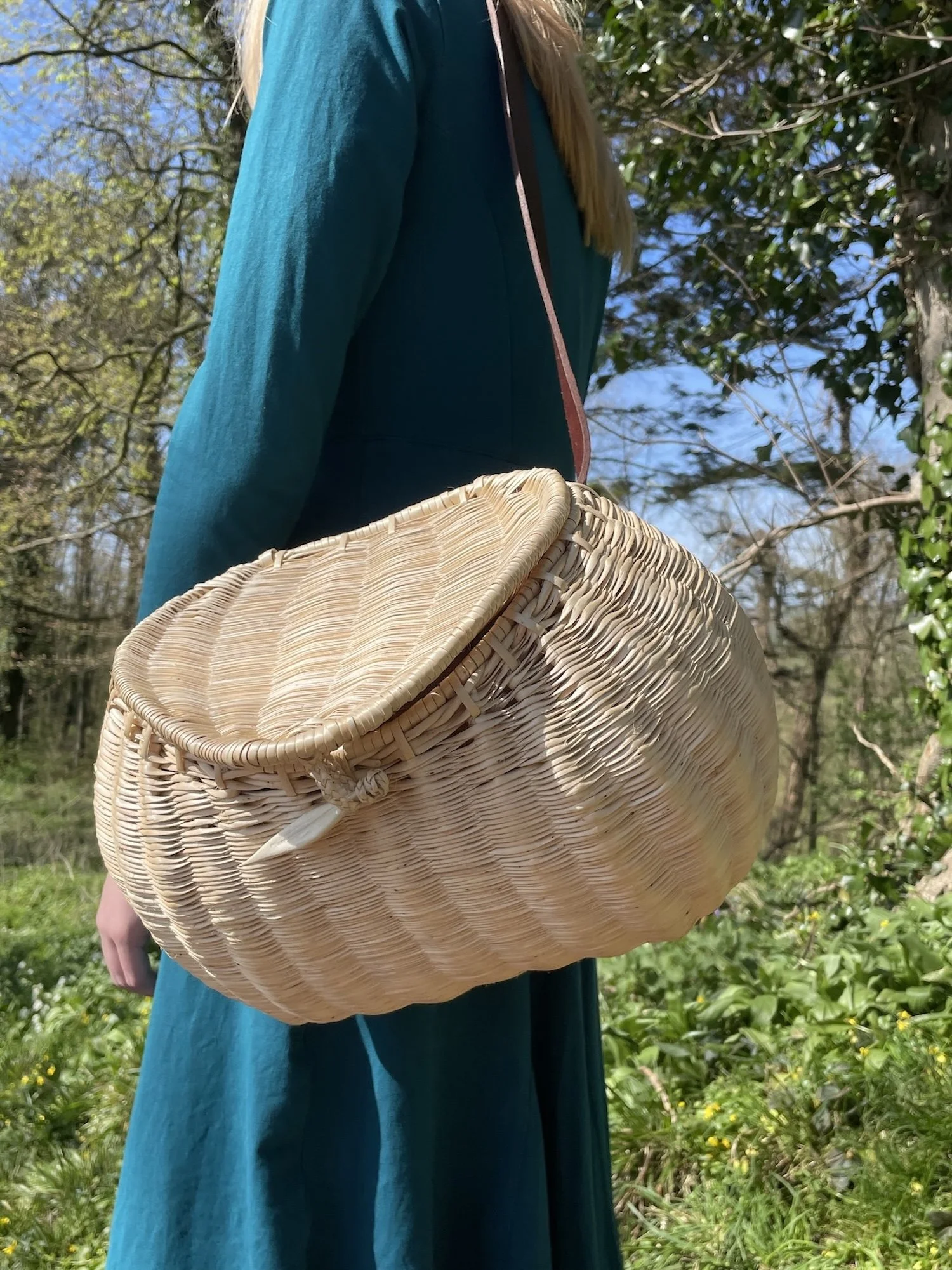
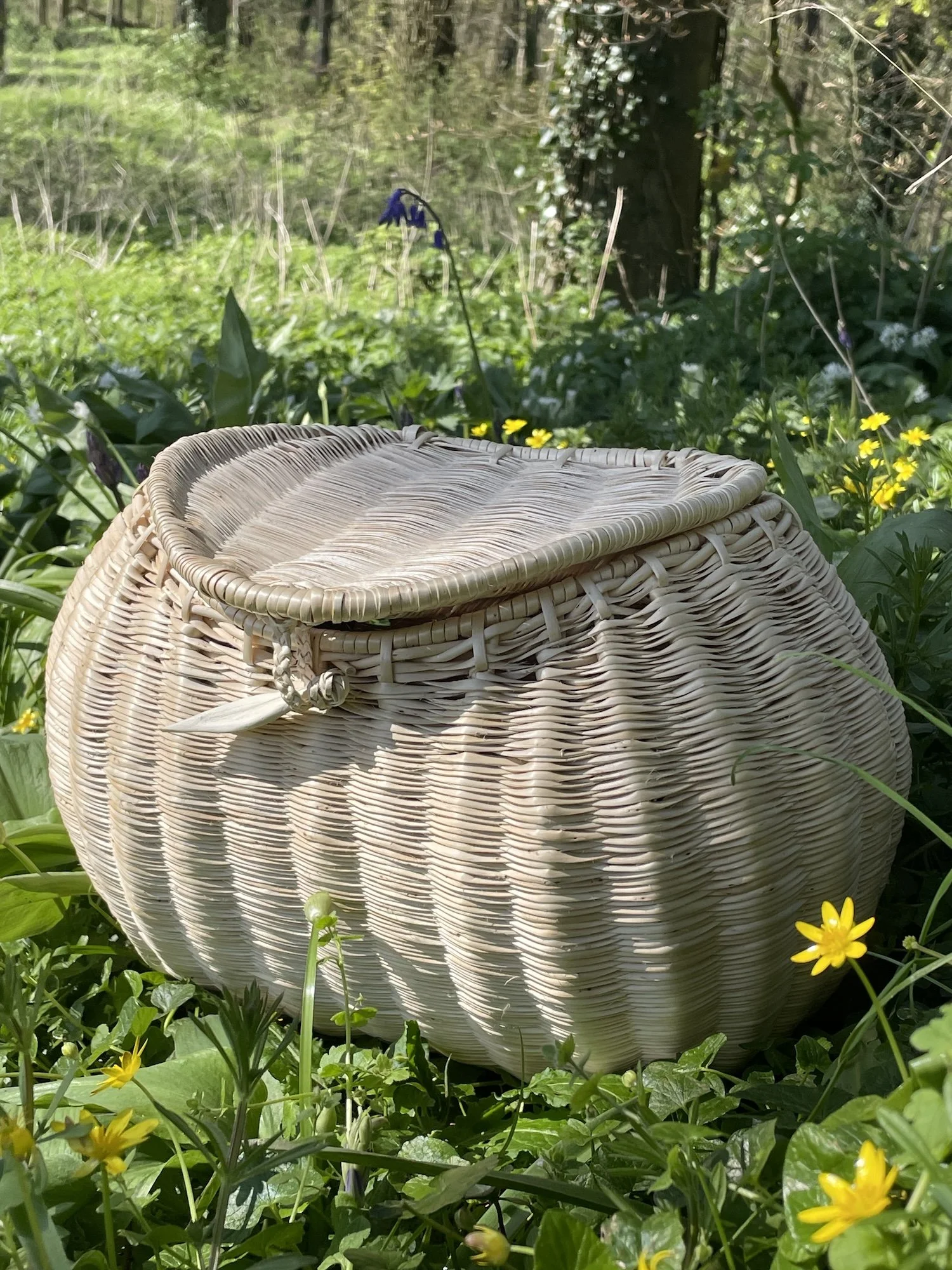
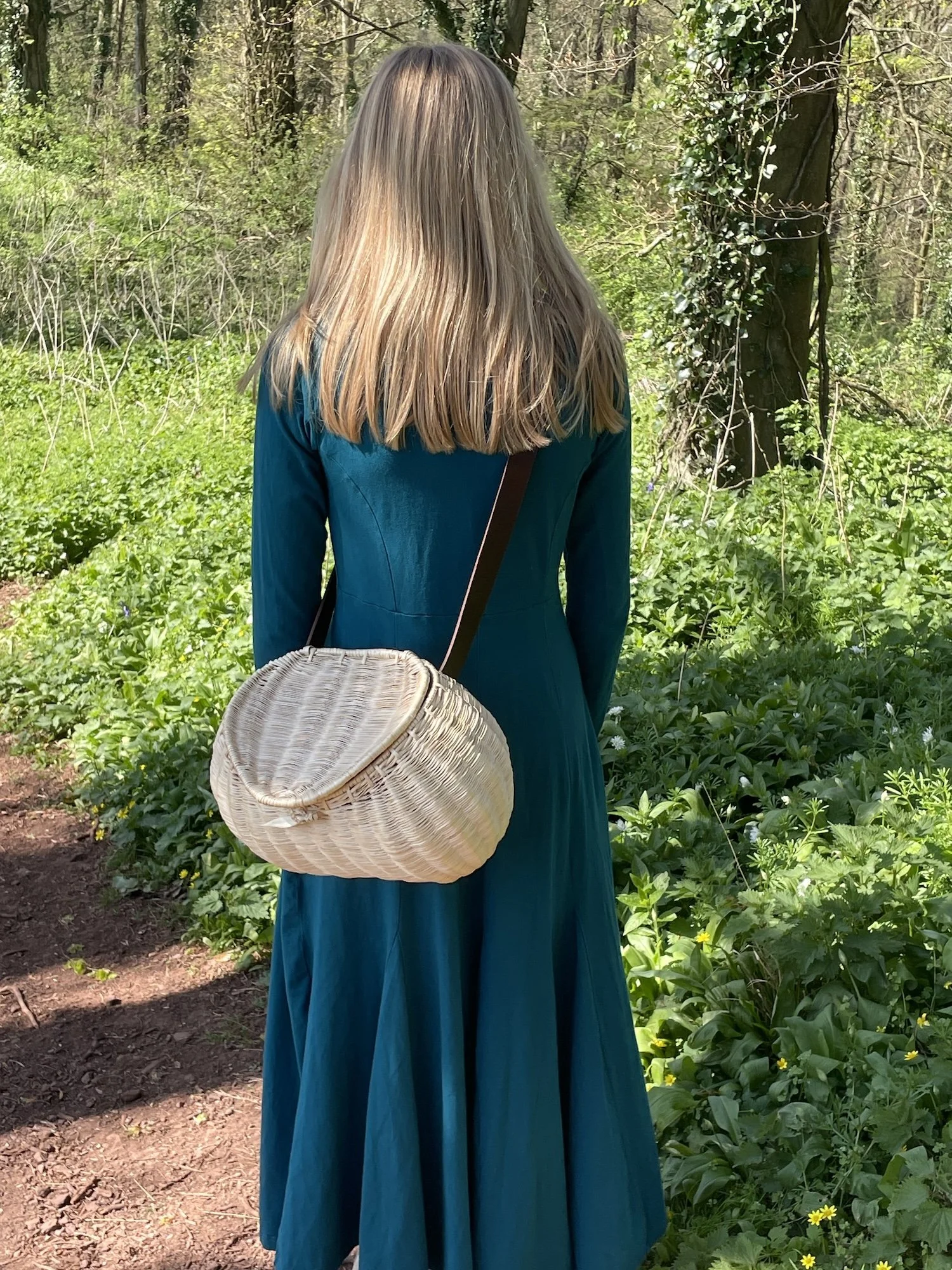
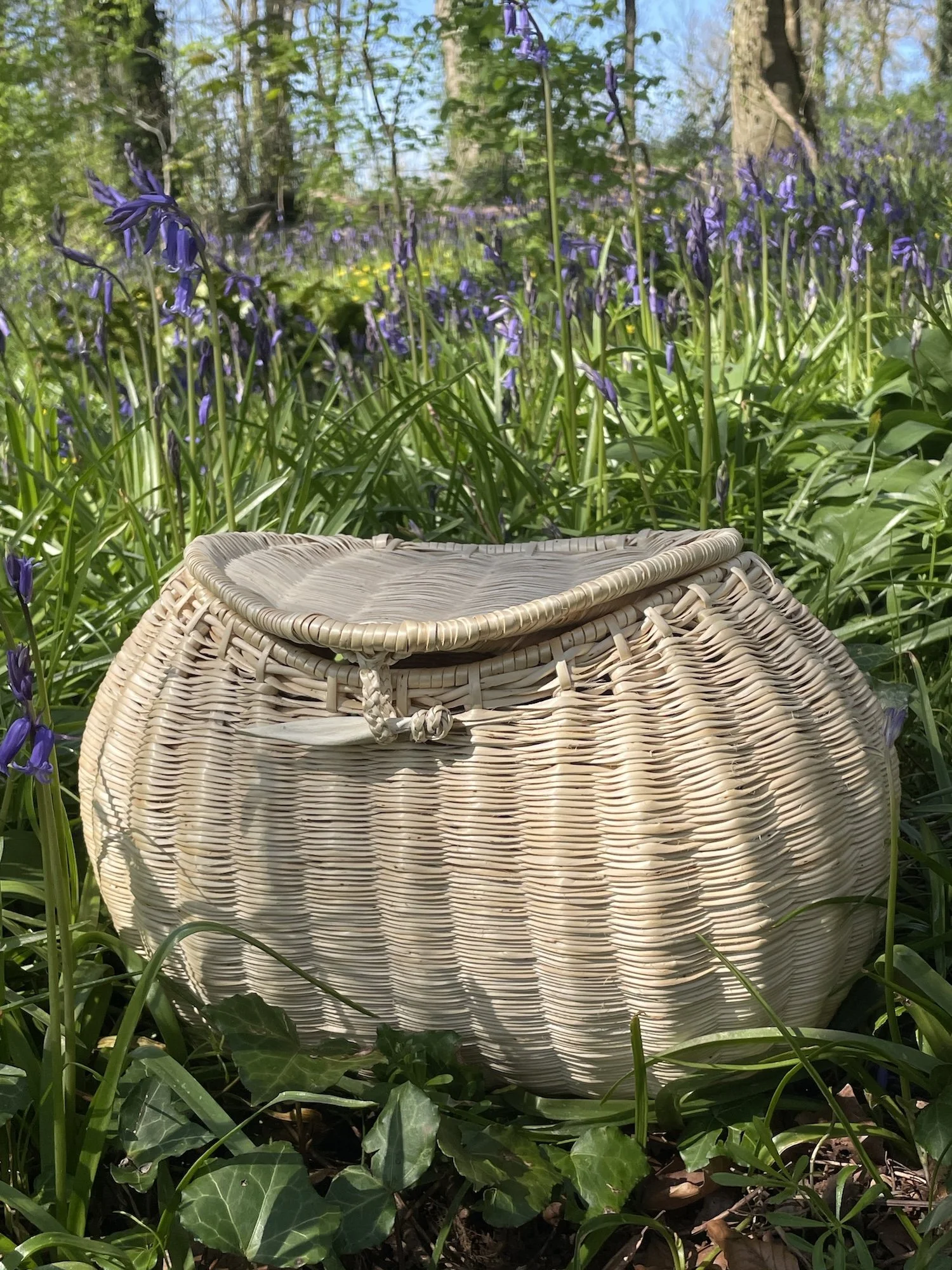
Kelmscott Creel
Stripped Black Maul Willow, leather, brass buckle
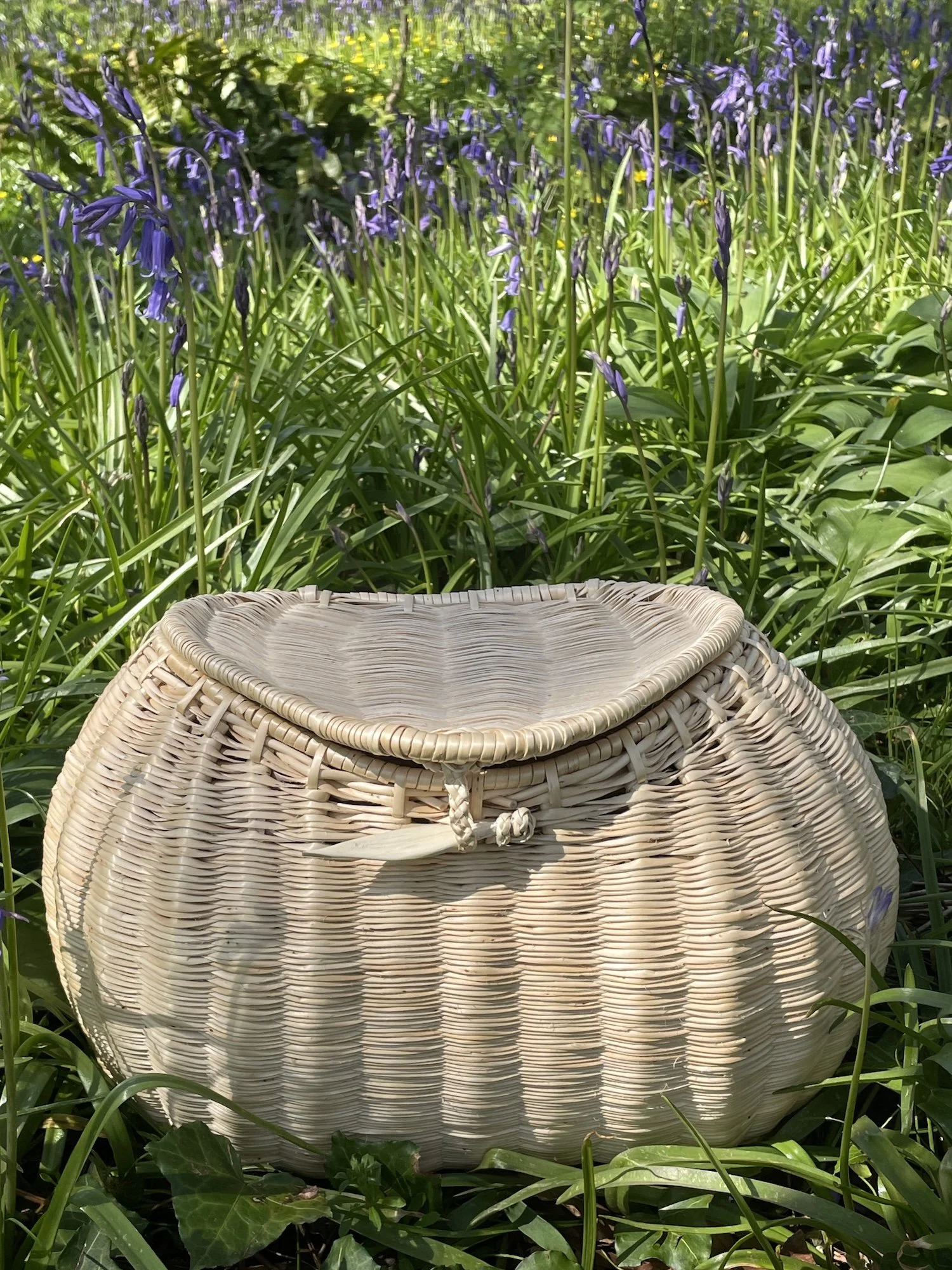
The Kelmscott creel represents for Sarah the culmination of the inspiration, exploration and rejuvenation that she experienced as the 2025 Maker in Residence at Kelmscott Manor, the home of William Morris and his family in Oxfordshire.
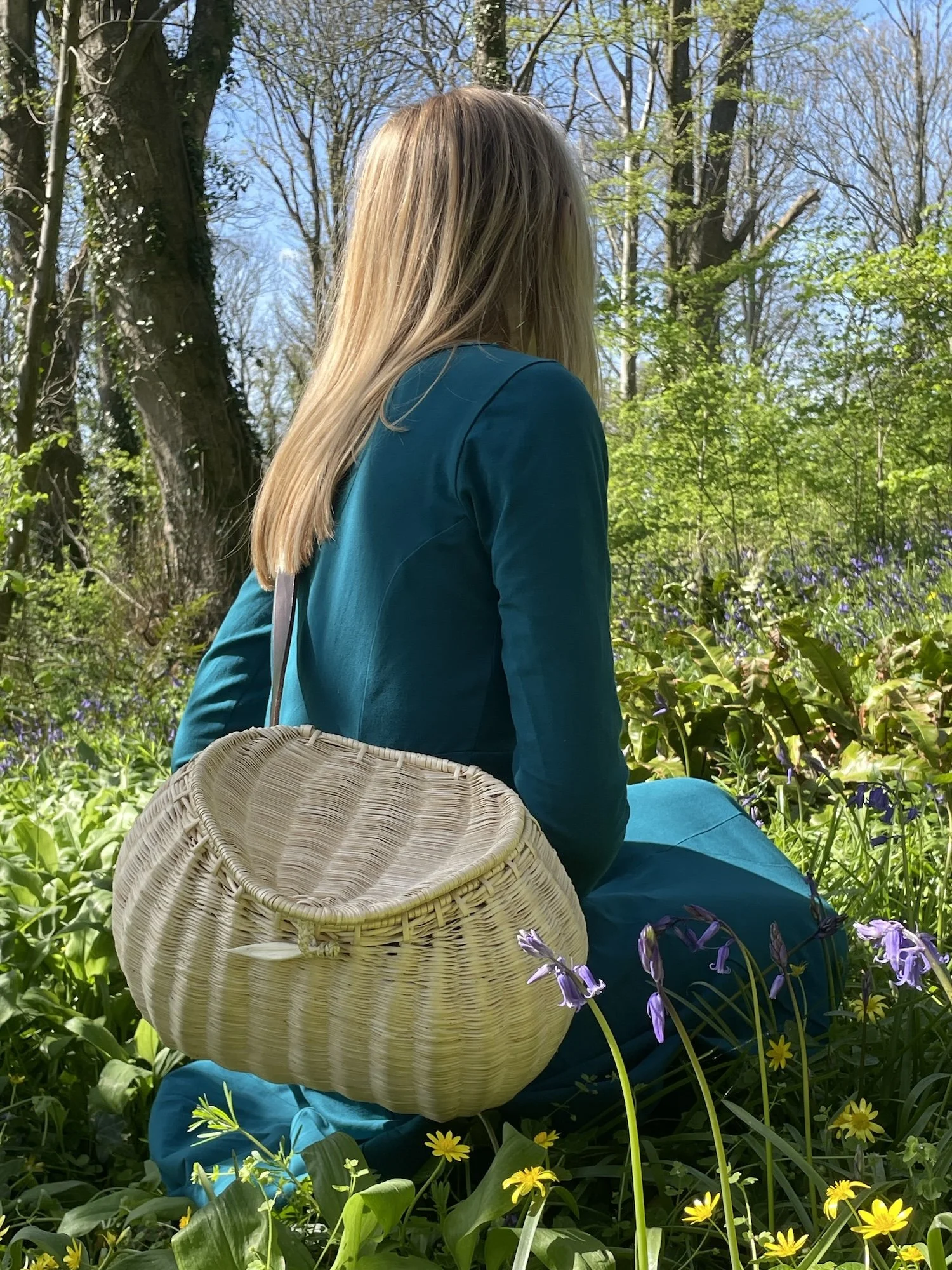
Inspired by Morris’s love of fishing on the nearby Thames Sarah has created a contemporary woven creel that showcases the advanced and rare technique of fine skein work willow basketry. Rossetti’s ink drawing of September 1871, now residing in the British Museum, caricatures Morris pre-occupied with reading whilst fishing. Slung over Morris’s shoulder is a traditional fishing creel, most likely made of willow. Sarah has imagining a new creel into being, one that very much carries traditional techniques within a contemporary form. Sarah does this to offer Morris joy and a thank you through time for what his immense vision and work has gifted her and numerous other craftspeople.
During the residency Sarah taught herself the now endangered technique of fine skein work basketry. This technically advanced form of basketry is thought to have originated on the continent in the 15th Century, highly sought after, very expensive and very little practiced in the UK and Europe for the last one hundred years. Few skein work baskets are now made except to very special commission as the techniques are exacting and slow, with much time spent on preparing the willow.
Being Maker in Residence at Kelmscott Manor has given Sarah the confidence to experiment, explore and now pursue fine skein work basketry within her practice. Sarah’s hope is that the Kelmscott Creel both forwards our knowledge of the craft form that she loves and inspires the present and next generation of willow weavers. April ‘26.
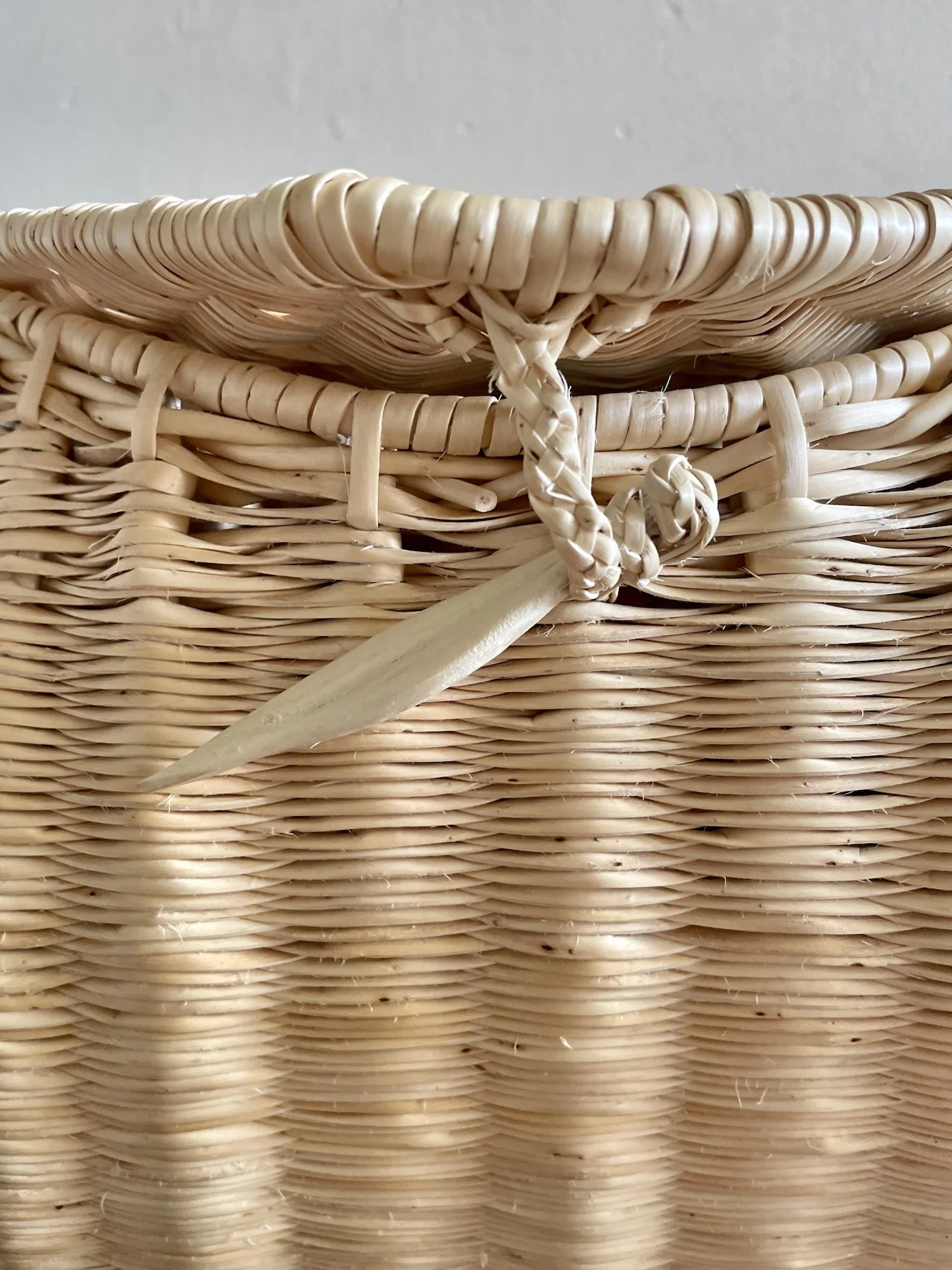
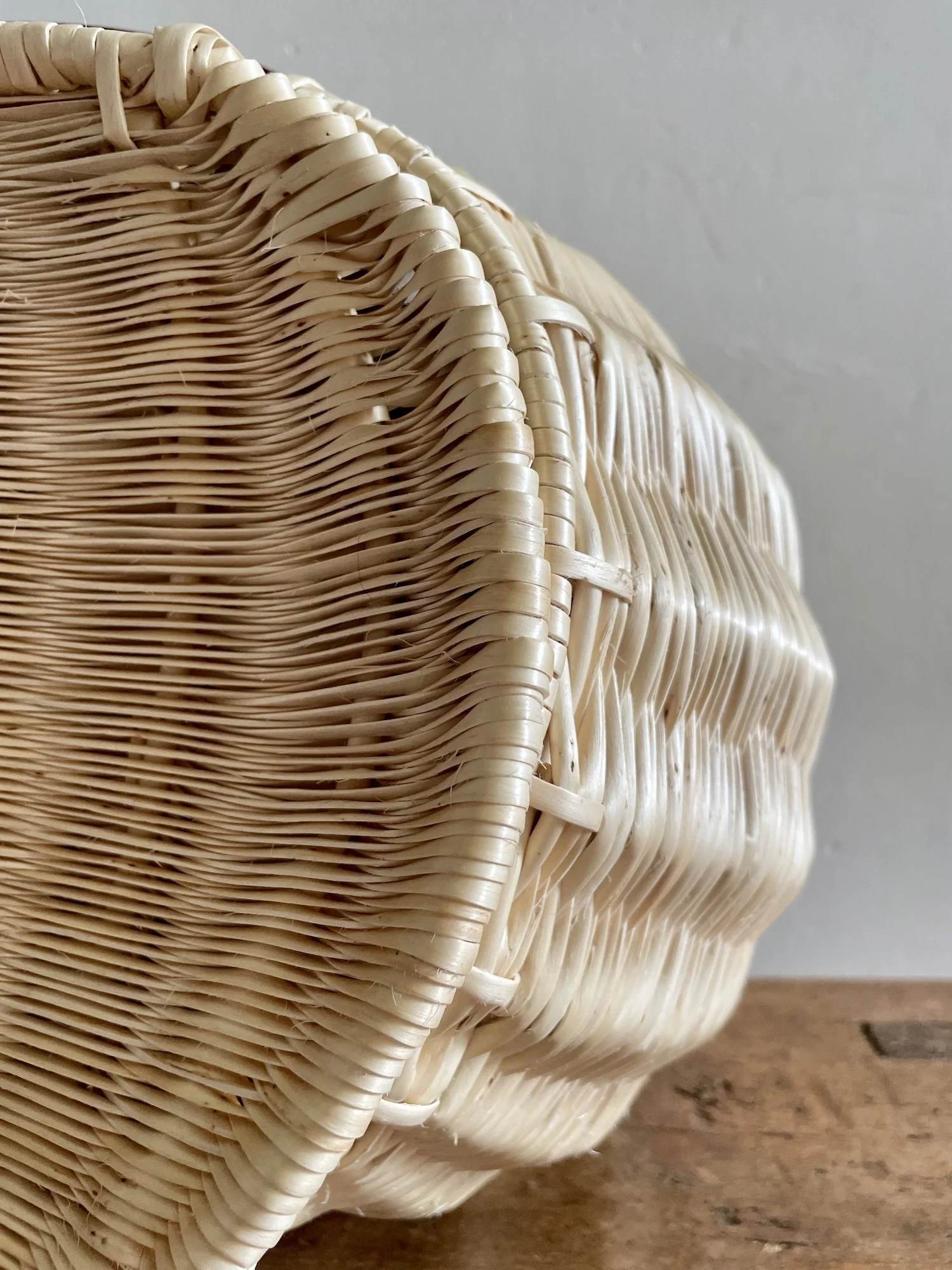
Technique: Fine skein work basketry. Long fine ribbon-like split willow lengths called skeins woven around willow ribs and layered upon each other to form a basket (turned-skeining). Dry 7ft willow rods, that have already been stripped of their bark are split into three lengthways using a cleave. Each length is then passed several times through a horizontal shave to remove the pith and then pulled through an upright shave in order to obtain a uniform skein of 4mm width. The basket is created using a rand weave in which the skeins are turned when woven around each rib so as to always show their outer surface. Skeins are used to stitch elements of the basket together, in both the construction of the base when tying in the ribs and when binding in the willow rim border.