Integral to what I do and believe in is for me to continually professionally train up to be the best maker that I can possibly be.
Over recent years, I have attended 1:1 skills sessions and 2 - 3 day workshops with top UK basketmakers including Jenny Crisp, Eddie Glew and Tim Johnson. The Basketmakers’ Association Spring School enabled me to learn from Eddie Glew in 2019 and Annmarie O’Sullivan in 2022. Attending the Tear Up festival in 2024 enabled me to learn from Rachel of Crafty Beggars. I have also attended 2 -3 day workshops by Benjamin Nauleau in 2024, Linda Limeaux in 2023 and Hilary Burns in 2014 and 2016.
In 2019/20 I was incredibly lucky in being able to regularly train with 79 year old, 4th generation Somerset commercial basketmaker Eddie Barnard.
Over the past 12 years of my basketry training, apart from a bursary from the Basketmakers’ Association towards the square work basket workshop at the Spring School in 2019, I have self funded my attending all workshops and 1:1 training sessions.
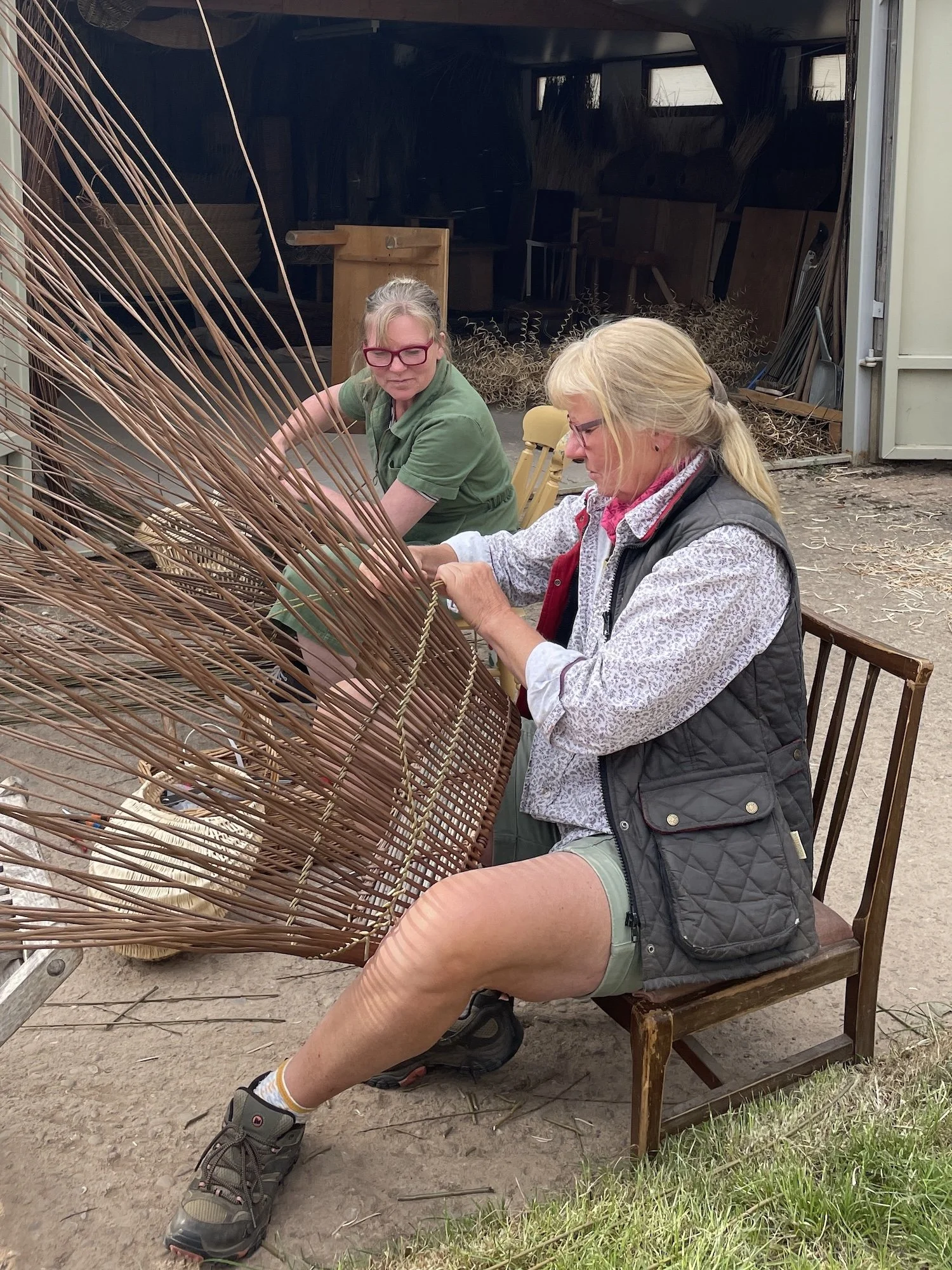
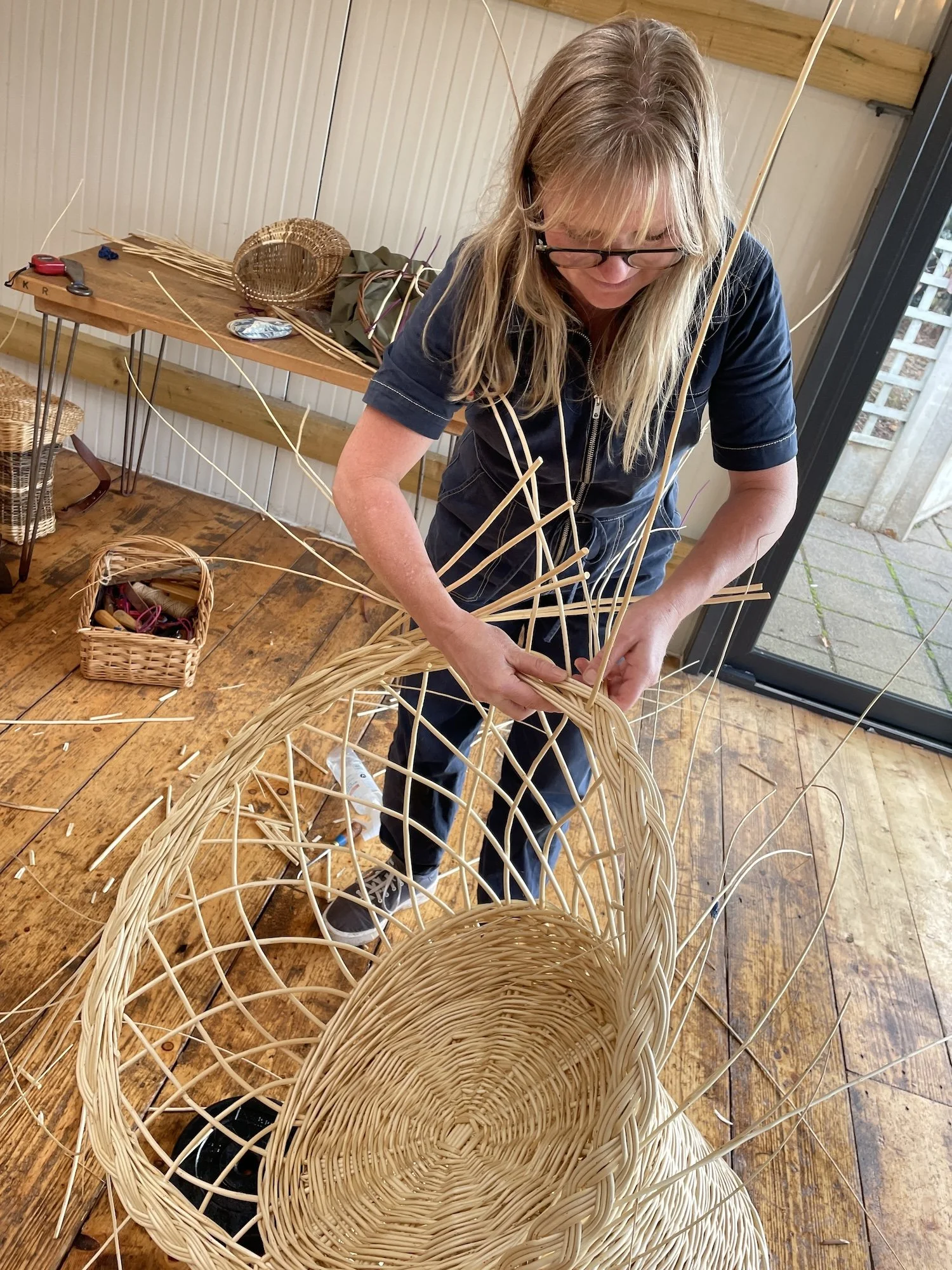
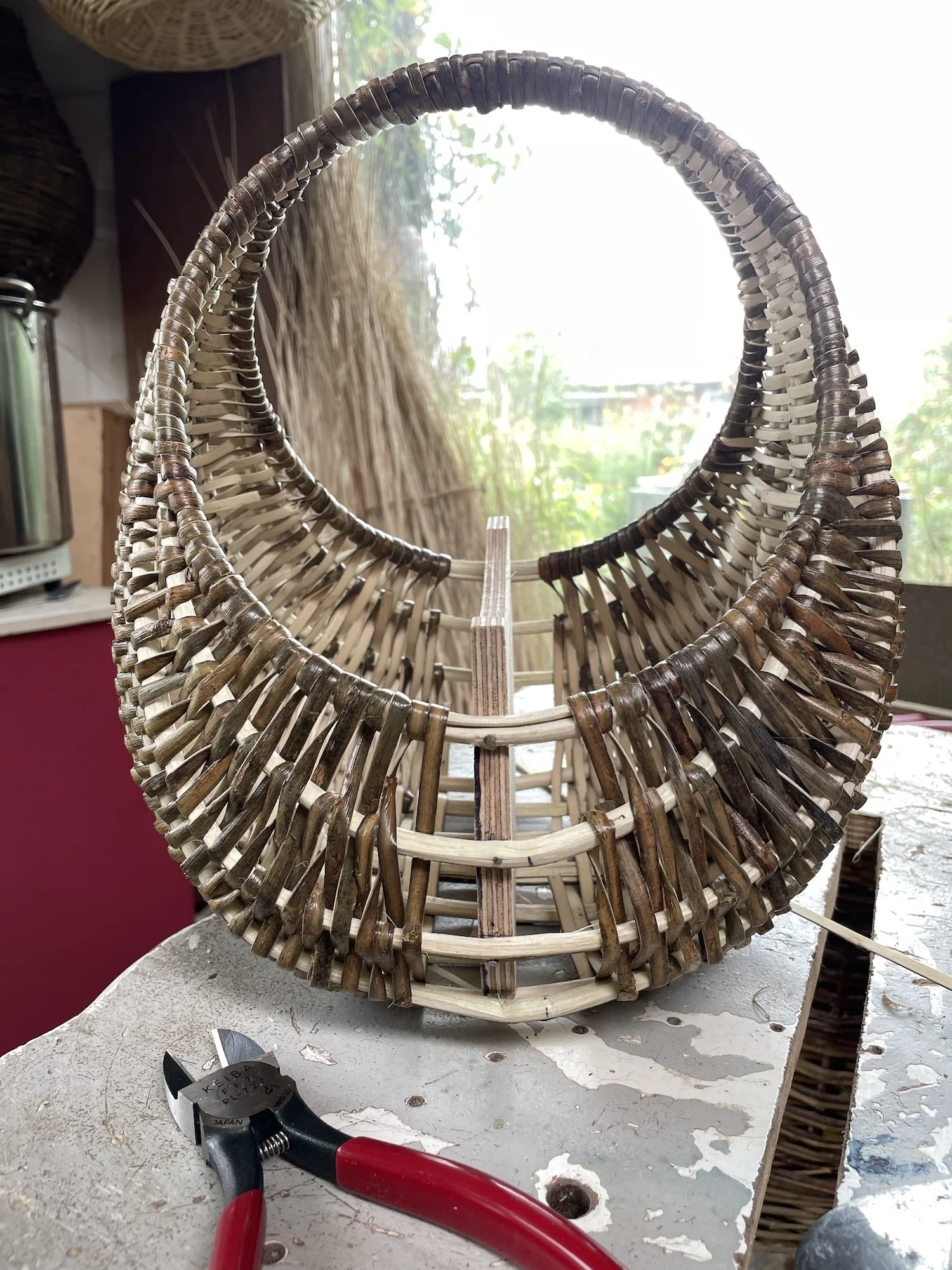
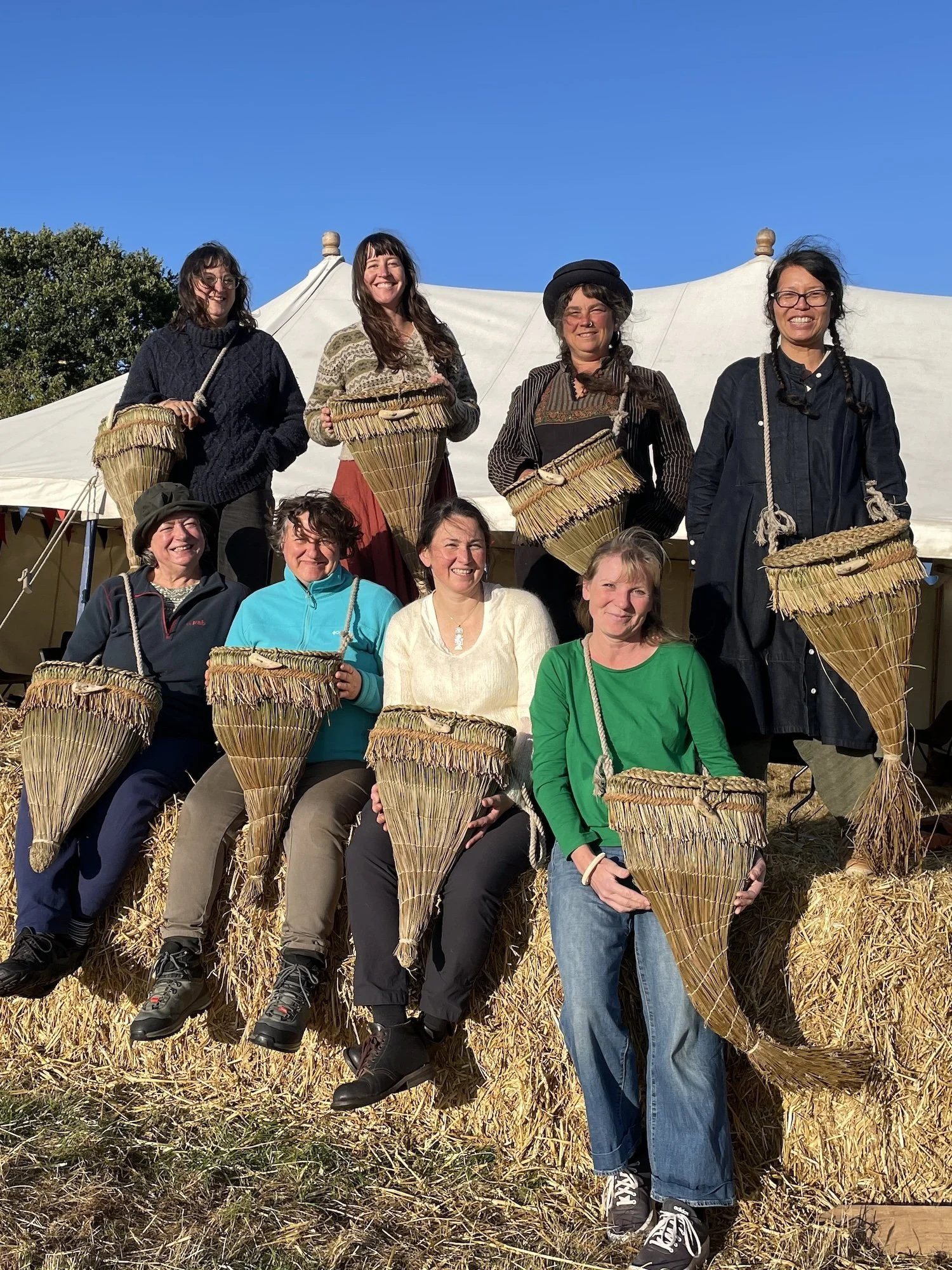
2024-5 basketry training featured below.
Training
Treasures
I’m always on the look out for willow and rush baskets, chairs and other basketry related objects that I believe should be treasured and are worthy of being in a museum. Lately I’ve been trying to save skeined willow work, often Victorian in age. Now an endangered basketry skill, there are very few basketmakers and chair seaters in the UK who have the knowledge of the techniques and the skills required to create willow skeins and make such beautiful work.
If you come across an object that you believe will be of interest to me, then please get in contact!
-
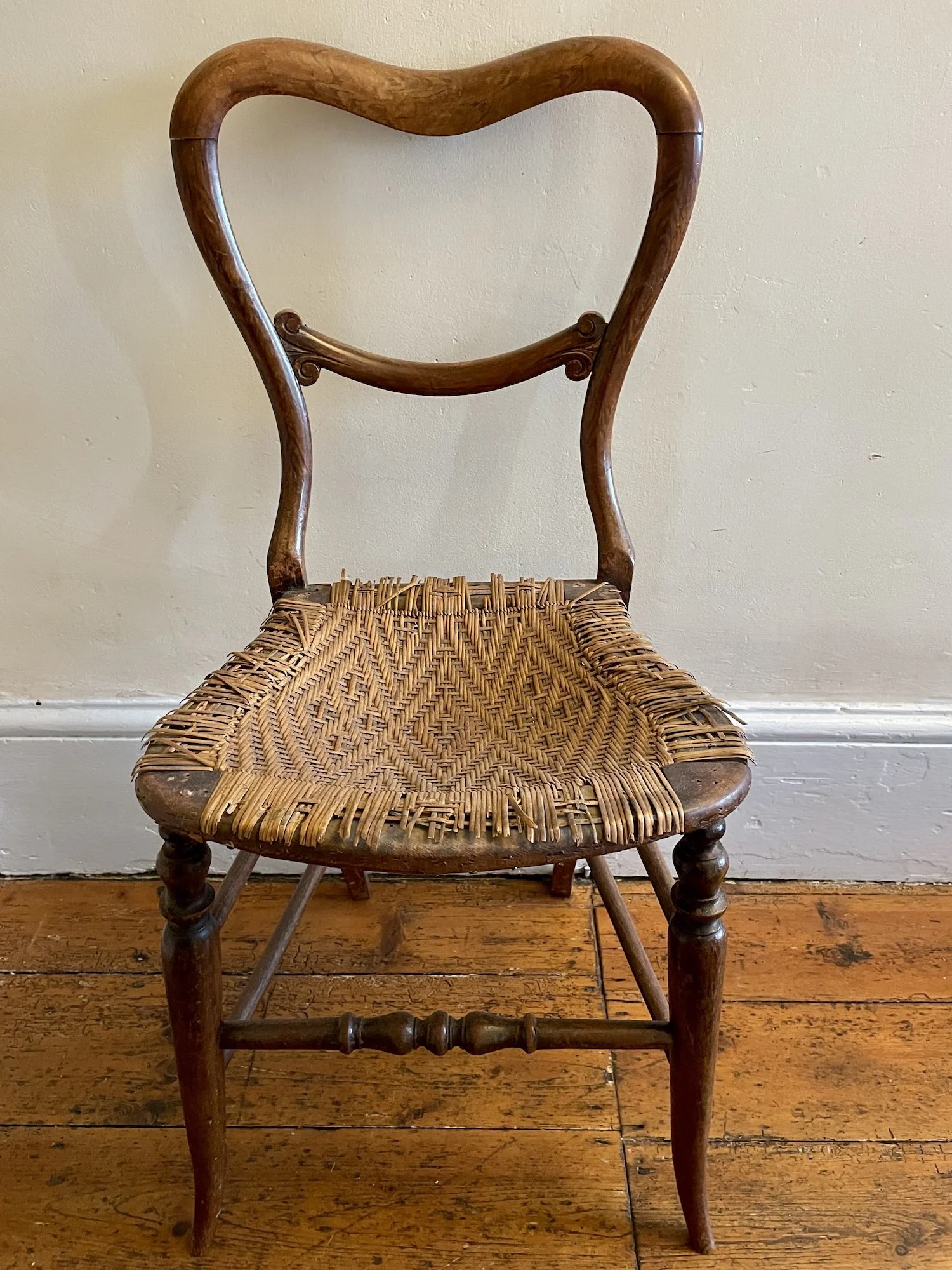
Antique balloon back skeined willow chair
Gifted to me in July 2025, this very rare skein work balloon back chair found it’s way to me via a Jane, a furniture upcycler from near High Wycombe. A Google Lens search by Jane resulted in her finding my Aesthetic Movement Eygptian skein work chair web content and then getting in touch.
The now very fragile intricate skein work had been preserved under layers of cloth and embroidery. The design has traces of red dye on the diamond patterns. I believe this chair maybe by Walter Skull, chair maker in High Wycombe and from circa 1860’s.
-
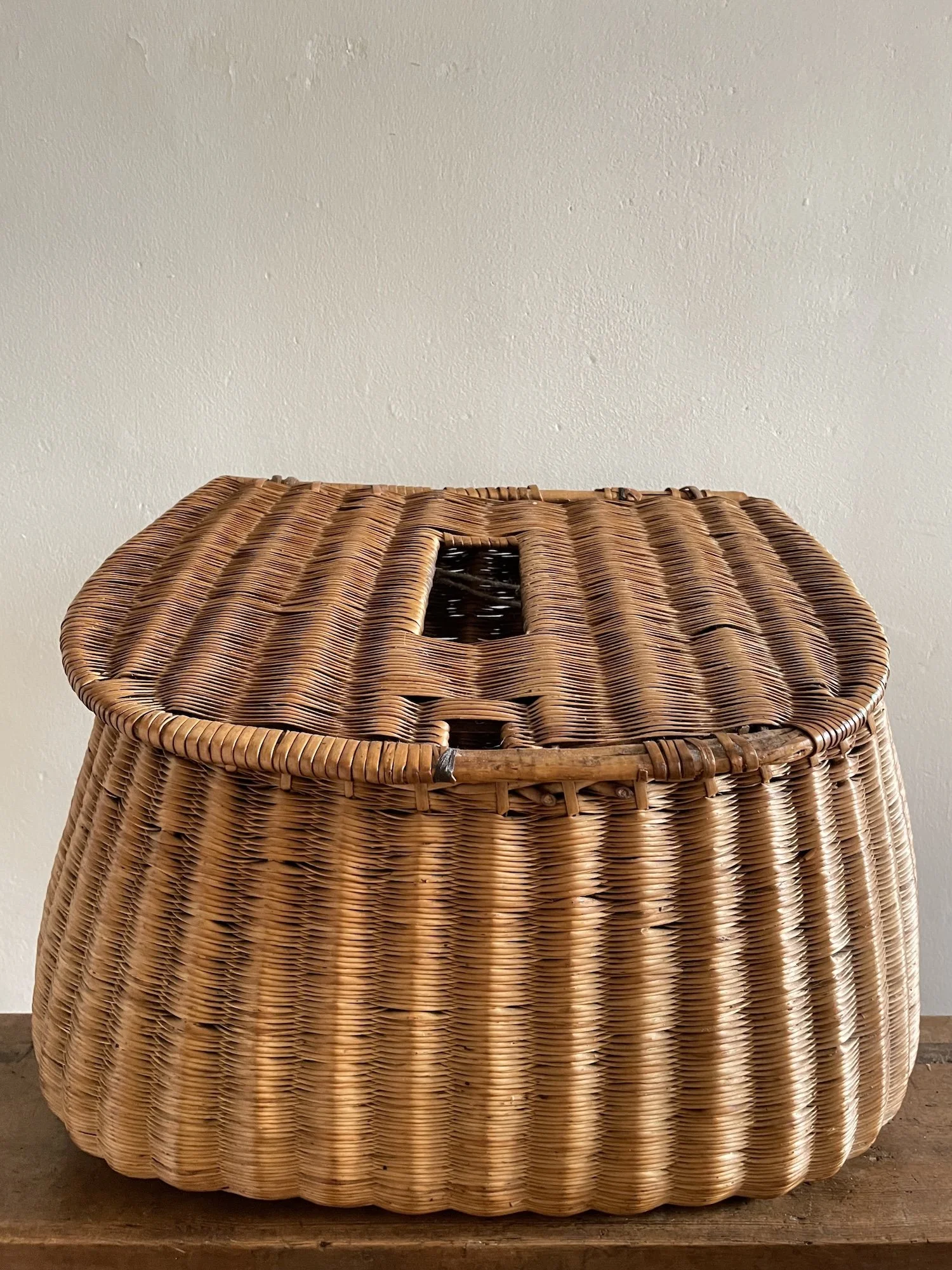
Angler's Basket
I’ve always held a soft spot for these beautiful baskets, also known as a fisherman's creel, and was lucky enough to find one in Northumberland.
Having aged to a beautiful golden honey colour, this basket is made of white willow that has been skeined (made into narrow ribbons). Each skein is turned as it is woven so that only the outer surface of the willow ribbon is on show.
It takes an immense amount of skill, time and I reckon patience to be able to create such a basket. Now often found in Antiques shops, it is thought that most of these baskets are Victorian in age and were probably made in France. The lid has an oblong hole through which fish could be put in, (although I’ve often wondered at the small sizes of these holes compared to the size of a decent brown trout!) My basket is 15” length, 8” width & 11” wide and missing it’s original catch and leather strap.A similar basket to this one can be found in the Museum of Rural Life collection. Object number: 65/26.I’d always been drawn to this basket's rather sculptural pouch shape and the fine ripple like movement of it’s weave. However it was from the first moment that I ever held a lovely example of this basket, with its ever so tactile nature, that I dreamt of one day being able to look after one. I now occasionally use this basket to carry not fish but important bits and pieces in my campervan!
-
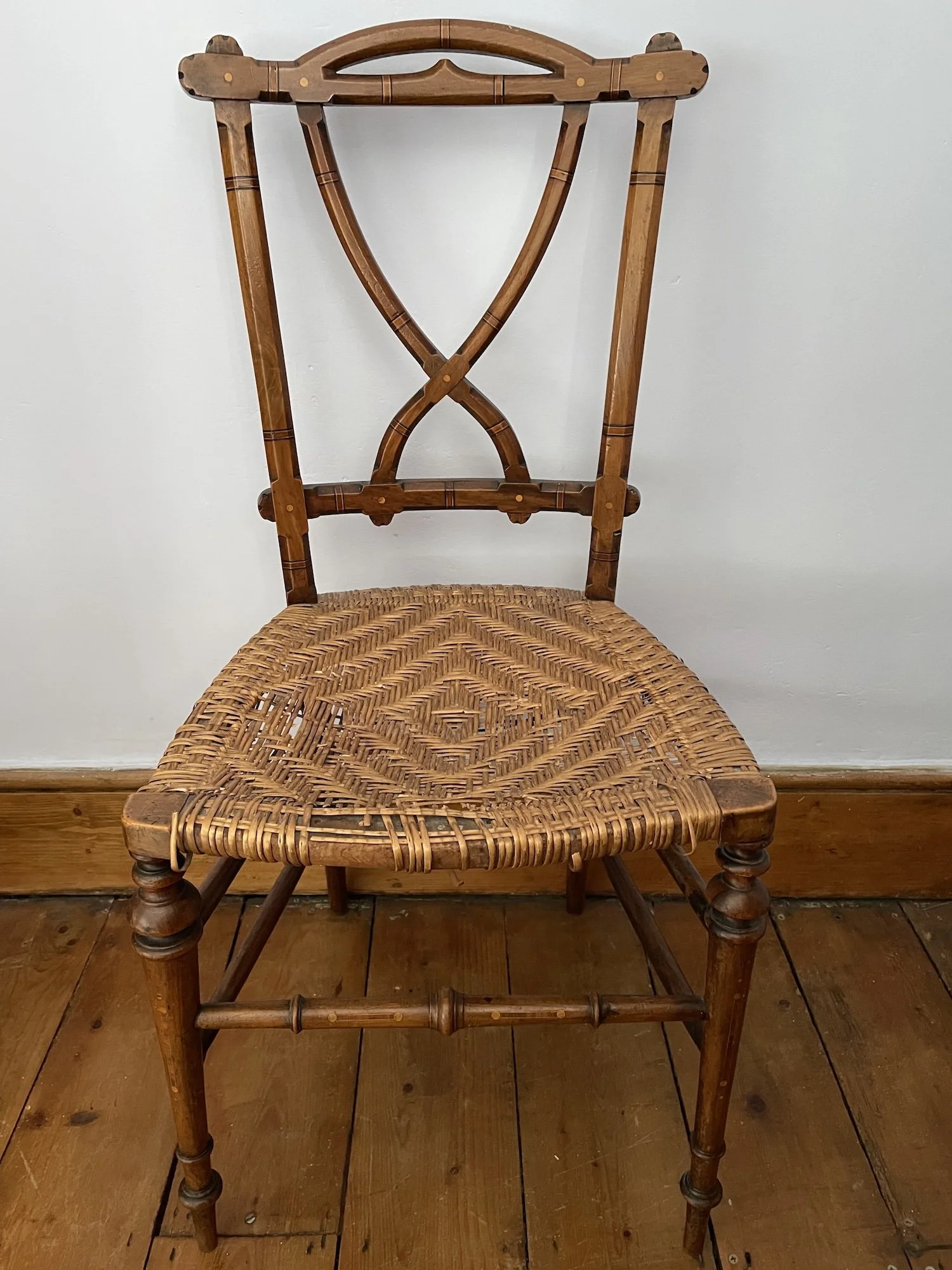
Aesthetic Movement Egyptian skeined willow chair
In October 2021 I came across this intriguing antique chair being sold by online auction, estimate £5 - £15, description "rush seated chair". At the time, I couldn't quite believe my eyes and subsequently giddily bid online and won the chair for £45. If my instinct is correct, this is an extremely rare survival of a skeined willow woven seated chair. I'm beginning now to research the origins of this highly unusual looking chair, which for me feels of the Regency period, as if it's been plucked out of the Brighton Pavilion, but it maybe of later Victorian origin.
Of course I'm hoping that this chair seat is made of skeined willow as apposed to cane, (though cane would still be impressive!) What my instinct is telling me is that the beautiful mellow golden colour, the deep sheen plus the marks on the material where the buds would have been, all make me think of willow. Skeined willow is made by cleaving, (splitting), whole willow rods into three or four pieces, and shaving the split pieces to obtain even-sized, ribbon-like strips or ‘skeins’. In comparision, to me cane material feels dull, a pallid colour whose strips show horizontal bars and slight ridges along their length.On the underside of the chair, skeined willow chairs do however have a cane foundation, in effect a mesh grid once called a 'Johnny save all'! Willow seats reputedly gave way all at once, so this cane foundation supposedly prevented someone falling right through! Looking closely at the underside of my chair, the foundation material does look different from the damask top weave. Along the chair rails, spaced about 1" apart, are a series of drilled holes, another clue indicating that this is a skeined willow chair.The detail of the damask weave is incredible. There are examples of a similar chair seat pattern made by Leslie Maltby for the English Museum of Rural Life in Reading catalogued along with an interesting article by the Antique Collector 7/83 titled 'Repairing Victorian Willow Chair Seats'.Such delicate looking chairs were known as 'occasional' chairs and it is thought so few now survive due to the short 15 - 20 year life span of the skeined willow seat. What I find particularly interesting is that according to the article, skeined willow seating was only ever done by basketmakers, not by chair seaters who worked in cane or rush. If you know of any further examples of skeined willow chairs or have come across this design of chair before then please do let me know. Meanwhile, I'm treasuring this beautiful, fragile chair and wondering how to preserve and prevent further damage to the seat. What a find! _____
Update January '22. Mary Butcher, who is one of the most prominent researchers into skeined willow chairs has been in contact with me and believes my chair to be an example of a skeined willow chair from the Eygptian Aesthetic movement. The chair is most likely to have been made in 1870 - 1880’s in High Wycombe. Mary has an ebonised and gold gilt unseated chair in the Eygptian style that looks to have the same frame proportions and identical form for the legs. As soon as I saw the words "Eygptian" the quirky chair back design made complete sense! I'm now going to carry out further research by heading to the High Wycombe chair museum. I'm just so pleased that my gut instinct was right and that this is a skeined willow chair of incredible rarity that i will now be able to study and if I'm incredibly lucky I maybe able to discover the chair maker.
-
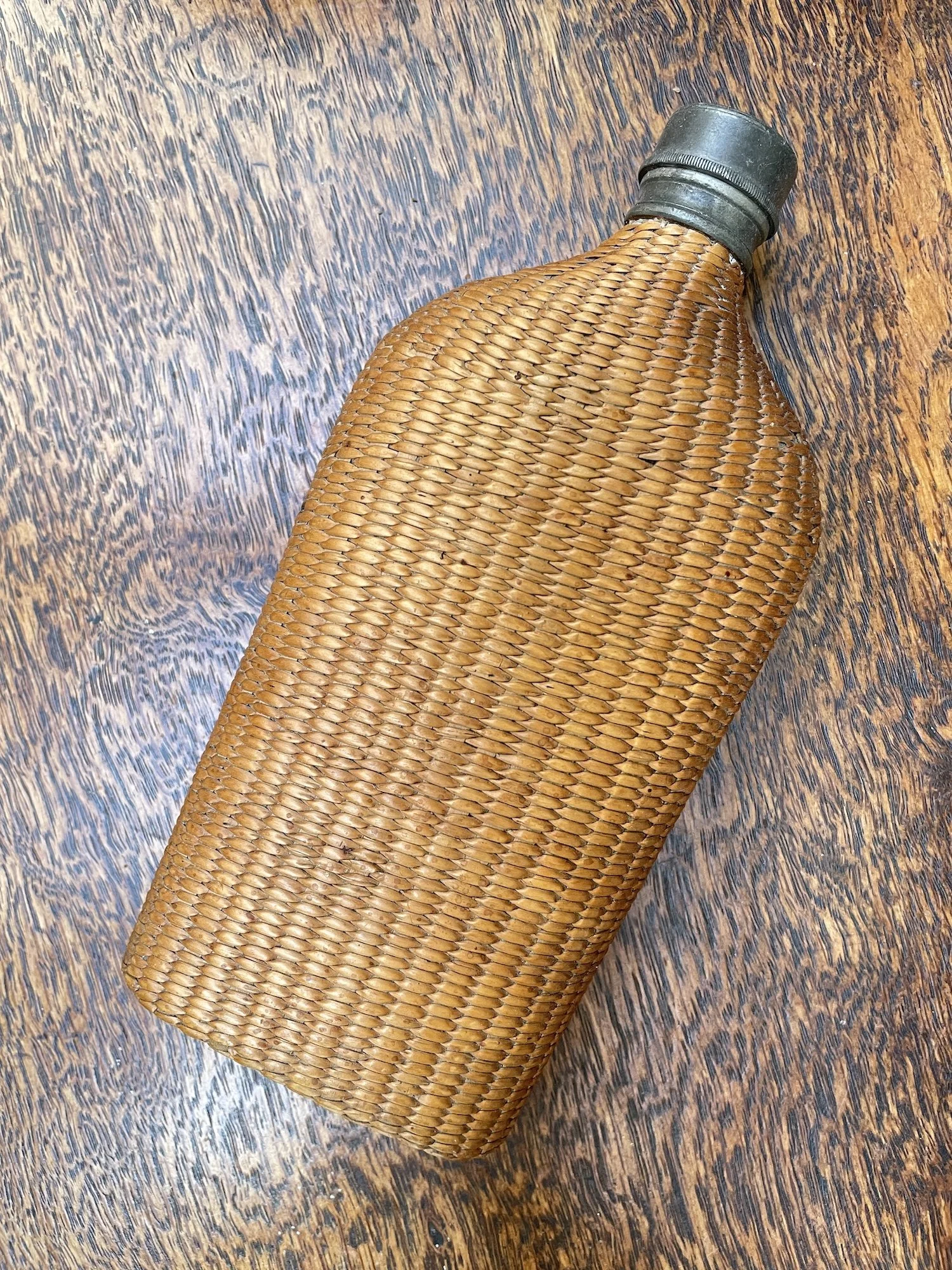
Skein work flask
This Victorian / Edwardian 7”glass bottle is covered in skeined willow with a silver screw top lid. When made, the bottom third of the flask would have fit snuggly into a silver cup.Perhaps few of us would now even take a second glance at this flask, but there’s very fine craftsmanship going on here. I reckon not many of us basketmakers here in the UK could nowadays make a passable replica. It takes a lot of time to make the skeins, (very thin strips of willow), and then a lot more time to weave them so delicately, beginning with the base of the bottle and finishing so perfectly at the lid. It’s such a lovely tactile object to hold, soft and warm. The white willow with age has become a mellow golden that glows. Not only decorative and tactile, the willow’s purpose is to protect the bottle from breaking.
I can imagine this flask being brought out and offered around during a grand shooting party...